
 Continue with onX Maps
 Sign in with Facebook








Top rope directionals, how do I make them better
|
|
There were two bolts 5 feet over from the climb we wanted. I did not want to take a swing. I used a quad for the anchor, and a cam with a shoulder sling clipped to the rope for a directional. In order left to right (as you read this) cam in a horizontal crack with a shoulder length sling, rope over the route, quad anchor. The carabiner on the redirects rope end got pretty banged up on the rock from scraping, and it bound up on the rock, which at times made it hard to take in slack. It also twisted the rope a decent bit, I presume because the directional was same height as the anchor, and it got pinched against the rock. Perhaps these would have been less problematic if we didn't hang dog the route so much? What do you all consider when putting in a directional? Do you try to keep the directional below your anchor, do you shorten the sling to avoid any pinches, is it better to try and make the carabiner free floating? I think I could have shortened it up in hindsight. The top of the route had a spacious gap the rope could have sat in from the redirect. Are there time's where it's just going to be shitty? |
|
|
Rope twisting is super common if the rope goes "up, over, and down" such as it is when you're TR'ing with two anchors at roughly the same height. IME no pinching is required. You'll see similar twisting if you are belaying a second from above and have the rope running horizontally to the top piece. |
|
|
In this case, it sounds like you could have built a dedicated anchor in the horizontal crack. Absent that, your best bet was to use a longer sling. |
|
|
95% of the time extending a directional is not what you want to do. The point is to redirect the rope and extending it just defeats that purpose. 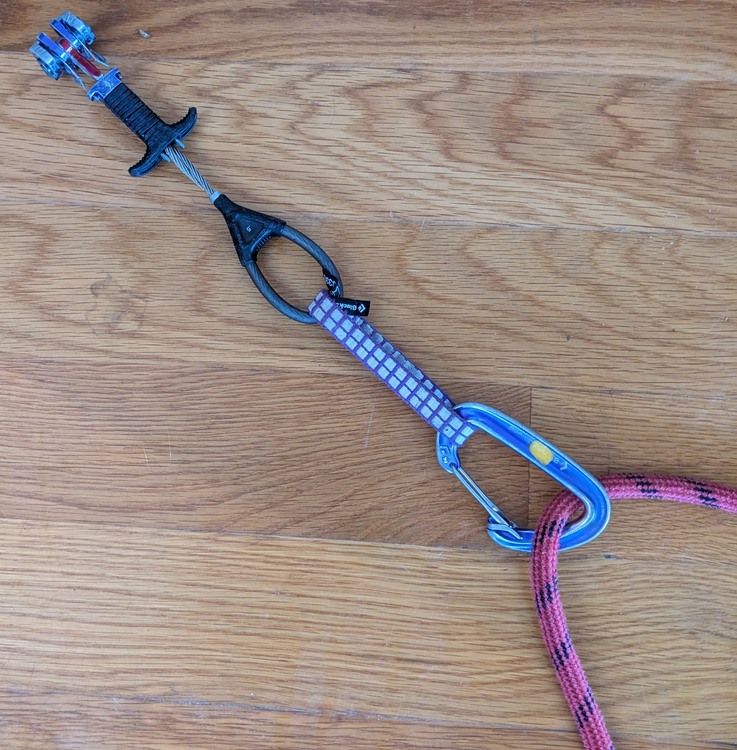 Making the spine face the rock is usually good enough: 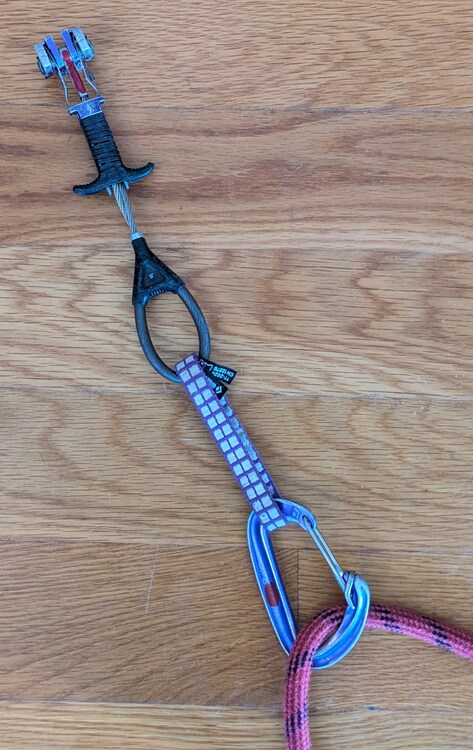
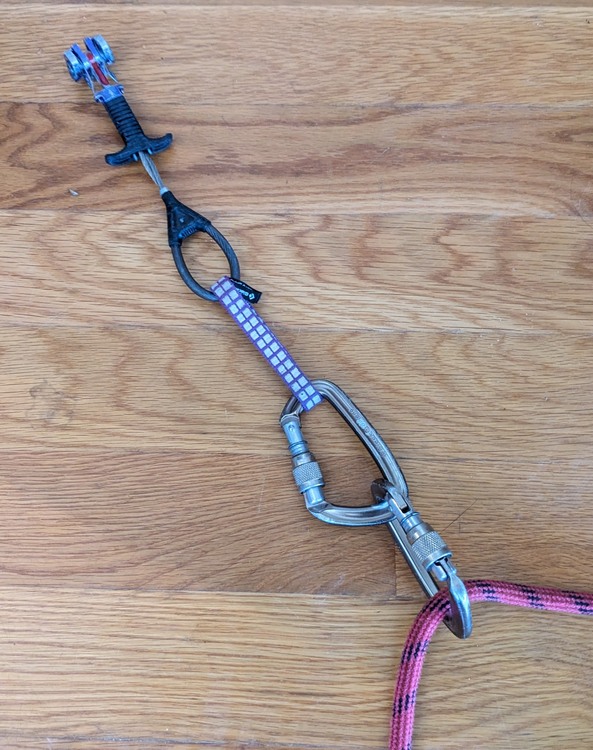 Also on the quad side having 2 carabiners usually does an ok job of keeping them aligned, but for really slabby top outs 3 matching ovals (or HMS) is even better. 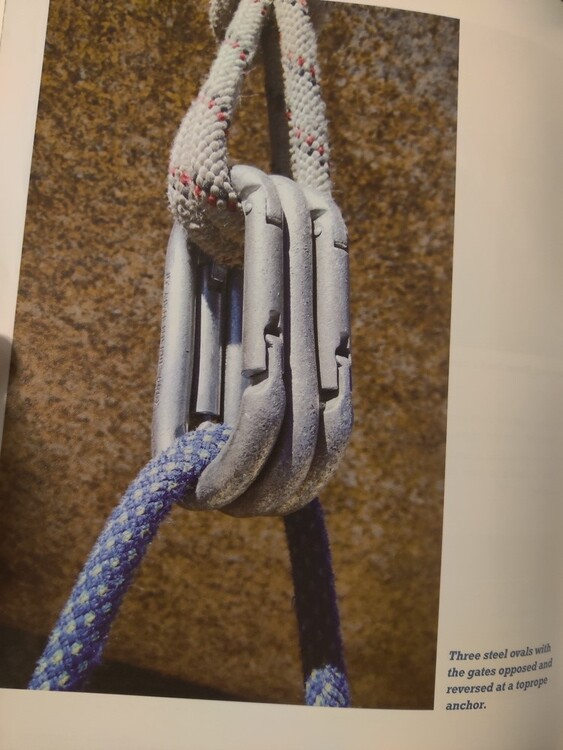 |
|
|
Matthew Pettywrote: Next time I think I'll fiddle more to make an anchor with some static line another person brought and not just rely on bolts like that. The horizontal crack flared out and It felt good enough for a direction but that's it. |
|
|
Austin Donisanwrote: I'm not sure I have the right words to describe the rock features. Basically, the horizontal crack I placed the redirect cam in was off to the left, and set back a bit. So that's why I extended, to avoid rope drag on another rock. But, reading all this, I probably extended too much. How much will the carabiner get beat up in those pictures? What will the three ovals help with on slab exactly? Thanks for the pictures, I hope to use them next time. They make a lot of sense. (this is the beating my carabiner took, just for a visual. 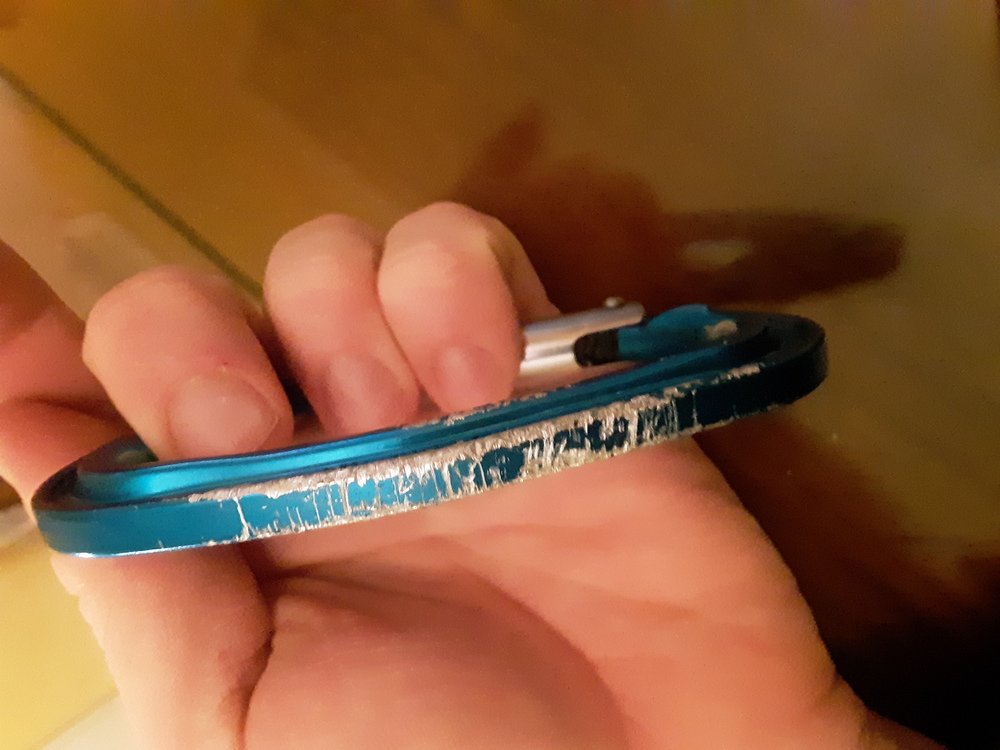 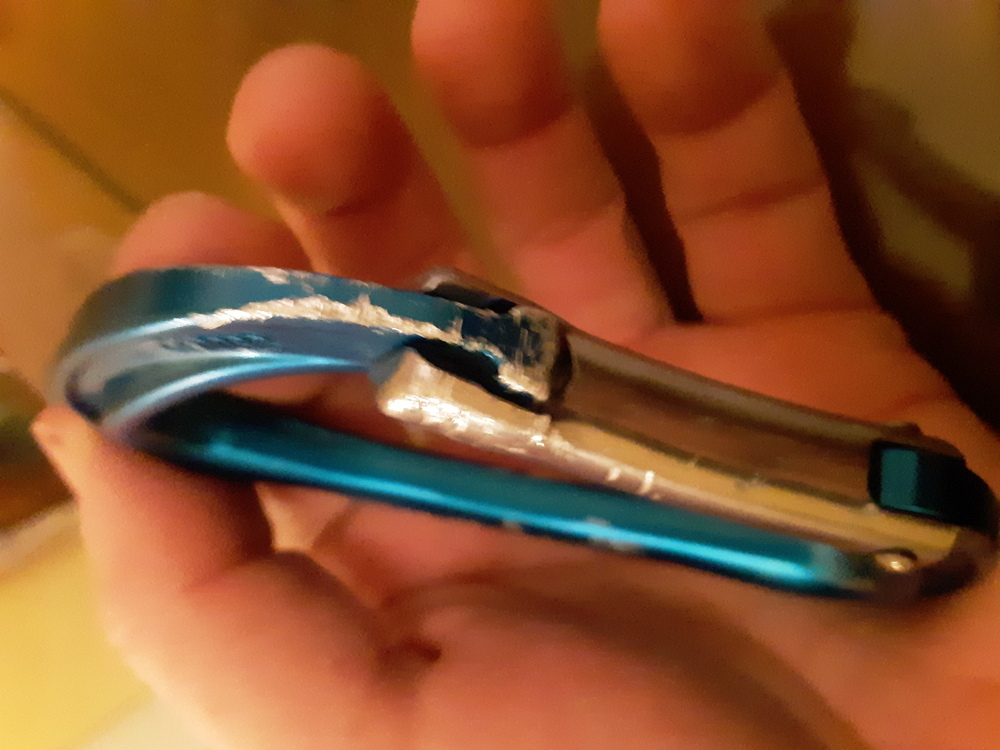 |
|
|
A photo of the climb would be great if possible. If a directional is "set back" extending it won't really accomplish what you want since it will get pulled mostly sideways. |


