
 Continue with onX Maps
 Sign in with Facebook








Direct belay off Anchor on multipitch routes - best device?


|
|
In Germany there's a tendency to always belay direct of the anchor on multipitch routes. I'm a brit living there and in the UK we're always told to protect the anchors. I use both methods and know what to use when. 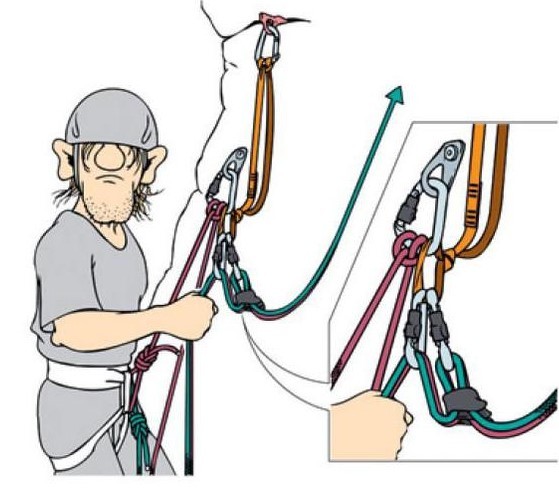 What about an Edelrid Mega Jul? I don't own one, but have used one. It didn't like how grabby it was, but it's a fascinating device and a pony with many tricks. In this image Edelrid show how it can be used on multipitch route direct off the anchor provided there's a dummy runner between device and climber. Their instructions state: "When securing a lead climber from a belay station in a mulri-pitch route with more than one rope length, be sure an intermediate protection point is always located between the securing device and the climber.". Has anyone used a Mega Jul in this way? It seems it would also have some brake assist. Or any other suitable device? 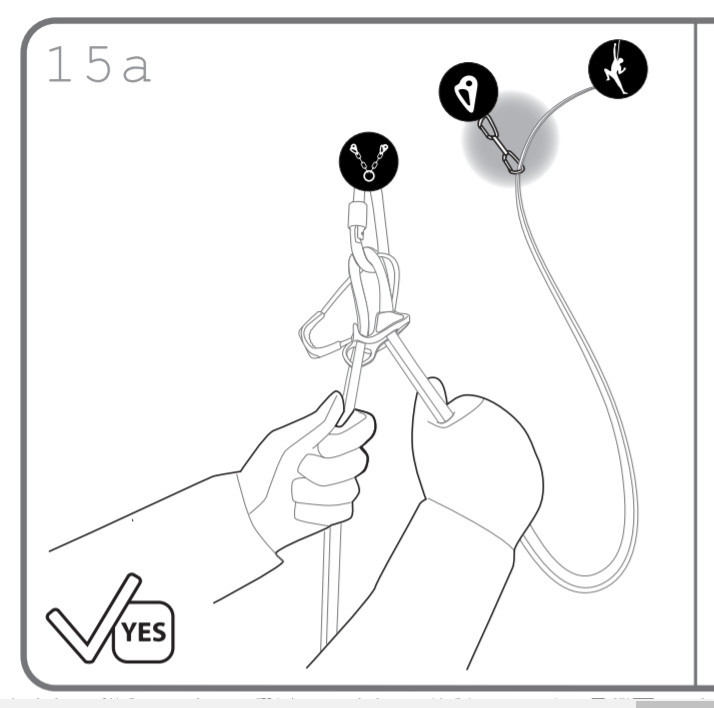 |

|
An ATC in guide mode is pretty standard. |
|
|
I believe Petzel does allow the gri gri to be used in that way. I have seen their drawing. If I recall correctly the brake strand needs to be redirected above the device. The ATC guide is fine. But not very easy to lower a person. Many accidents resulting from improper lowering have happened. The DMM Pivot is like Atc guide but much easier to lower. Slickness and stiffness of your rope will play a role as to which device works best. DMM works a bit better on skinny ropes, the ATC guide slightly better on fat ropes but provides less friction on rappels. If you are using double or twin ropes, I have heard the Alpine up works quite well. |
|
|
Noel Zwrote: Petzl instructions say belaying a follower from above with a Grigri is an approved use: |
|
|
I think he's talking about lead belay off the anchor, not top belay. That's why Edelrid stipulates a piece of pro between belay and lead climber. The device won't catch a straight downward pull onto the device. You can't lock off the brake strand in that circumstance. |
|
|
I'm not talking about bringing up the 2nd. There are many established methods for this e.g. ATC in guide mode or grigri with a redirect. What I'm talking about is belaying the leader up the next pitch on a multipitch directly off the anchor (device attached to the anchor) and not to the harness. Sometimes what I'm talking about is called a fixed-point-belay. Here's an article about it in general: https://www.alpinesavvy.com/blog/belaying-the-leader-with-a-fixed-point-belay I'm not heavy and always considerably lighter than my partners, if my leader falls on a multipitch and is attached to me and not the anchor is get smashed into the wall. I have injured myself more than one. The belayers in this video are me!: |
|
|
Well then I misinterpreted your question. But the answer is still the same for the most part, same devices. Just make sure you can safely operate the brake strand without interference. Of course the gri gri will impart a higher load to your anchor compared to the other devices including the munter. Make sure it’s up for the task regardless of device. |
|
|
I've used a megajul with a dummy runner numerous times, usually not using "Fixpunktsicherung" (which I consider a major PITA, but it's absolutely understandable you want to use it) though. Never had problems. Essentially, what the dummy runner does is it makes sure you can maintain a safe angle between the rope going into the device and the rope going out of the device. "Safe" in this case means yes, the break assist works, and for this there should not be a difference between "Körpersicherung" and "Fixpunktsicherung". Note that your dummy runner, depending on how the bolts / pieces of pro are placed relative to each other, might have to be a single biner instead of a draw, e.g. if the bolts are spaced closely and a quickdraw would be too long. You really want to avoid contact between the dummy runner and the belay device so it can do its job. Also, be very aware of your brake hand position. And don't forget that you can remove the dummy runner as soon as enough reliable pieces of pro have been clipped. DAV also teaches the "plus-clip" where the leader, upon reaching the anchor, climbs up to the next bolt, clips the rope i to it and down climbs again. Sorry if I misunderstood the question and only told you stuff you already knew ;) |
|
|
Alpine Up works for this. See 2:59 in this video. |

|
Personally, I would stick to belaying the leader off my harness. But if you're surrounded by other people doing this, why not ask them what they do and why? GO |
|
|
GabeOwrote: I do belay of my harness but not always. On a multipitch climb most leaders understandably want to clip something straight out of the gates or there's a dummy-runner. The upshot is the belayer get ripped into the first piece of gear. Being a leightweight I've had the cam on my grigri close once, my head smashed twice because of the unavoidable sideway pull and once I pulled a tricam. Basically there are so many dynamic forces at play who knows what can happens. The main thing is I never dropped the brake strand. I never thought of the Climbing Technology Alpine UP. Thanks for suggesting it. The videos shows exactly what I want it to do. Around my way ATCs are used like this where nothing is clippable from the belay station. 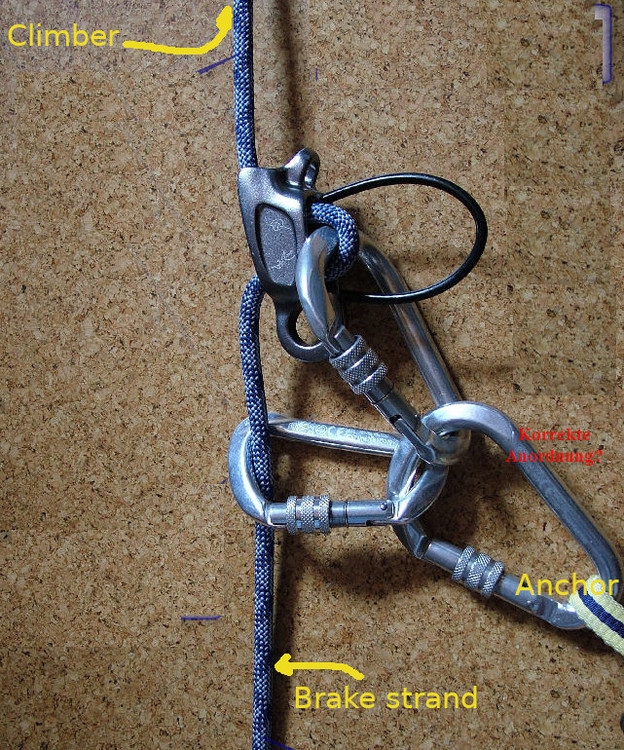 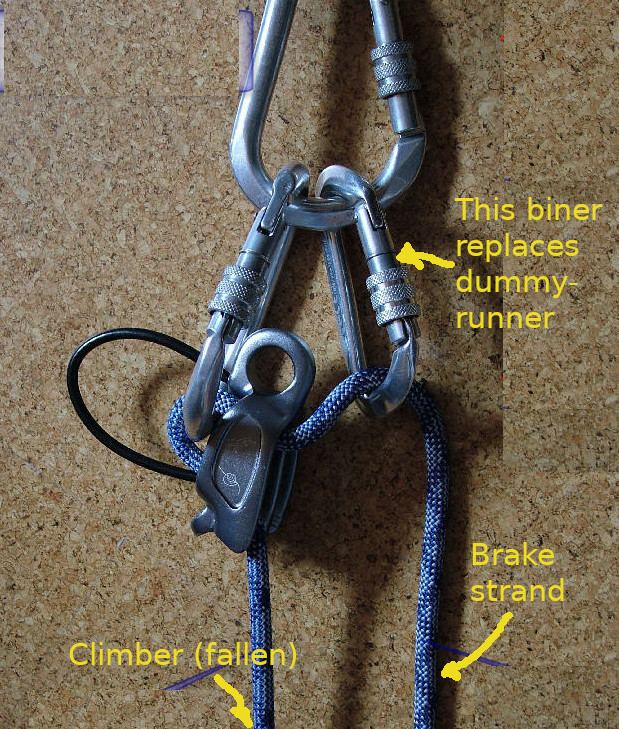 Here's a video shown to many climbers in Europe to frighten us into direct belays. Form your own judgement. It's subtitled. |
|
|
Noel Zwrote: This video has been posted and discussed a few times on MP. Belayer getting slammed into the wall is definitely a real problem under certain conditions, but fixed point belay (belaying a leader directly off an anchor point) is not without its issues. For one, it's difficult to not short rope the leader especially when they pull up rope fast to make a clip, or you need to keep quite a bit of slack in the system to compensate for that. If you use a device instead of a munter, then there's more faffing around with re-directing the brake strand or clipping jesus draws to make sure either the set up can catch a factor two fall or the set up will have no chance of experiencing a factor two fall. Personally, I take a hybrid approach. If the chance the leader will fall is high early in a pitch, I will do a fixed point belay using a munter hitch. Once the leader gets anywhere from 3 or 5 protection points clipped and they feel pretty confident, I will switch to belaying directly off my harness. It is much easier to give a good belay directly off the harness. Once there's enough friction in the system, the belayer can still get lifted, but it's not going to be as violently as shown in the ENSA video. If you look carefully, in the ENSA video, there are no protection points clipped to the rope between the belayer and the top piece when they dropped weights for their tests, and only one or two protection points clipped when they had a real person taking the fall. In a more realistic situation, once the leader is high enough on a pitch, there will be more friction/rope drag in the system to reduce the upward pull on the belayer. |
|
|
Noel Zwrote: In light of this video, which I am seeing the first time, Noel’s added images which show a simple and compelling technique and aikibunjin’s suggestion: When is the munter direct off the anchor optimal? When are assisted brake devices direct off anchor optimal? Are there situations when the ATC rigged with a dummy biner is not advisable ? |
|
|
If you are climbing multi pitch with gear (rather than sport climbing) it is a fairly standard practice to build an anchor which can withstand an upward pull. That would normally keep one from getting pulled off the belay stance up to the first piece while belaying off one’s harness. |
|
|
Live Perchedwrote: Here are a few threads for your reading pleasure: "When are assisted brake devices direct off anchor optimal?" I need to see more real world usage of assisted brake devices in this application to be convinced. For one, giving slack quickly in a fixed point belay can be a pain even with a munter, ABD adds another layer of PITA to it. They can lock up when pulling out slack fast, and when it's hanging an anchor point instead your belay loop your hands are not in the designed position to release the ABD quickly to give out slack. It's interesting to note that with the Giga Jul, the instruction shows to put it in manual mode and not the assisted mode for a fixed point belay. 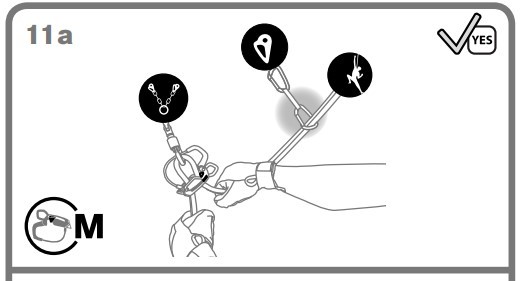 |
|
|
You are likely to get better answers from Eastern Europeans. Most of the posters on this site are in North America, where direct leader belays are uncommon and routes aren't usually bolted with direct belays in mind. I, like most of the other posters here, have very little personal experience with direct belays. That being said, my understanding is that tube style device with redirect or Munter hitch is best for direct belays. I would personally recommend the Gigajul, if you want to swap between belaying off your harness or directly off an anchor. Edelrid recommends using the device in tube mode, when belaying off the anchor. |
|
|
Noel Zwrote: Did you belay a whole pitch like that? I can imagine it was a huge pain. You could have unclipped the brake strand from the second biner once the leader have a few protection points clipped. Then it would be much easier to belay. 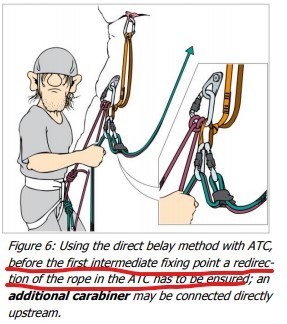 Since the root cause of your issue is the weight difference between you and your partner, here's a out of box thought: have you considered the Edelrid Ohm? It is designed to mitigate the weight difference between partners. You can't use it with trad gear, but if you can clip the Ohm to a first bolt, even if it's part of the anchor, you can lower yourself on a munter so you're a safe distance below the Ohm, tie off the munter, then belay off your harness. It may not be a conventional method, but worth exploring. Hit my post limit, but edited to reply to Matt Castelli below: You're still thinking in terms of belaying a follower using a Grigri off the anchor, or using an ATC off the harness with a re-direct off the anchor. This thread is not about belaying a follower. When belaying the leader directly off the anchor, there is no pulley effect. |
|
|
Greg Dwrote: Grigri will impart roughly half the load of non locking devices. |
|
|
I think you have this reversed. Because of rope slippage through a non locking ATC vs. a locking GriGri, the ATC will show lower forces on the belayer, climber and the anchor. Petzl did some testing years ago and roughly calculated that an ATC device would show approx. 30% lower forces than a GriGri. Their results and short article are posted on their webpage under “Tech Tips” - “Influence of the belay device” |
|
|
GabeOwrote: this. my best advice is: "don't" |
|
|
Matt Castelliwrote: ummm, no. it won't..... |


